
Understanding Rejection Sensitivity and Its Impact
The Moment That Still Stings
All it took was two words… “I know.”
Two simple syllables that she probably didn’t think twice about. Two ordinary words that anyone else might have brushed off without a second thought. But for me, those two words hit me like a punch straight to the chest.
One of my best friends was visiting from out of town. She was staying for a few days, and because we rarely get to see each other, I wanted to soak up every moment that I could. We spent time with friends, went to an event in the city, laughed, caught up, and just enjoyed each other’s company.
But the moment I said goodbye changed everything.
When we hugged, I told her how much I loved her. I probably said it a few times because I genuinely meant it and wanted her to feel it. Maybe I wanted to make up for the physical distance between visits. Maybe I wanted that reassurance without even realizing it. It could’ve been both.
And her response, said casually, almost automatically, was simply:
“I know.”
It wasn’t rude. It wasn’t dismissive, at least not intentionally. Just a mere response. But when those words hit my ears, something inside me shattered. It felt like I had exposed something precious and tender. I shared my love, my excitement, my vulnerability, and it was met with a shrug.
Or at least, that’s what my brain told me.
That’s what rejection sensitivity does. It turns an ordinary moment into an emotional earthquake.
And that small moment, that simple phrase, stuck with me. I replayed it in my mind over and over and wondered If I was being too much. I was worried that she didn’t mean it back. My brain spiraled quickly, like it always tends to do.
This is what rejection sensitivity feels like for me. It’s not about what people do. It’s about how my nervous system reacts. I feel everything so deeply, and the slightest perceived brush-off can send me into a barrage of shame, panic, and hurt.
What Rejection Sensitivity Actually Feels Like

Honestly, there isn’t a single day where I’m not affected by my rejection sensitivity. It’s something that sits with me in every interaction, every conversation, every moment where there’s even a possibility of misunderstanding.
Something as small as a car horn can send me spiraling. If someone honks at me while I’m driving, I immediately assume that I did something horribly wrong. My body reacts instantly—my heart races, my stomach twists, and this wave of embarrassment washes over me. I take it personally, even though I rationally know it’s just a noise.
That’s the exhausting part. My mind understands logic, but my body doesn’t.
Living with rejection sensitivity feels like you’re walking on eggshells, every emotion trembling just beneath the surface, waiting for the smallest trigger. Everything touches you, and everything gets in, even things that were never meant for you.
When someone rejects an idea that I share, I feel it physically. My heart pounds through my ears, I start trembling, and a shockwave of emotion just shocks my nervous system. It all happens in a matter of seconds. It’s not because I think my idea is perfect, it’s because rejection hits in me in the most personal way possible. It hits that vulnerable part of me. The part that tells me I’m “not enough.”
Criticism is another story entirely. I don’t handle it well, and I wish I did. My reaction tends to swing in one of two directions: I either collapse inward and cry, or I burst outward in frustration because the pain is too big for my body to hold. It’s not that I don’t want to improve, it’s just that criticism feels like an attack on my entire being.
Early Lessons: Learning to Hide

Growing up, I learned rather quickly that if I stayed quiet enough, stayed small, invisible even, I could protect myself. My Quietness became my shield. I figured that if I didn’t attract attention, I couldn’t be judged. If I didn’t volunteer answers, no one could point out if I was wrong. If I kept my thoughts to myself, no could use them against me.
I remember being in elementary school, sitting in the back of the classroom, observing while my peers confidently raised their hands. Their energy was magnetic, drawing smiles and praise from teachers. I always wanted to participate, but the thought of being wrong paralyzed me. So, I stayed silent, and the let others take the spotlight. Early on, I learned to disappear into the background, thinking that my invisibility kept me safe.
One time in college, I was required to give a speech. I remember it being well thought out, well written. I had rehearsed it over and over again and memorized each word. But when it came time to present, I nearly had a panic attack. My hands were shaking, my voice was stuttering and cracking, and I started sweating profusely. While everyone else seemed to get through their speech with ease, I was the only one that had this kind of reaction.
I went home feeling so ashamed and embarrassed, thinking that my worth was tied directly to how others perceived me. That moment stayed with me. Even now, I can still feel the humiliation, the awkwardness, and the overwhelming discomfort.
But truthfully, hiding isn’t the same as healing. And while my quietness protected me from immediate judgment, it didn’t prevent the internal hurt that built up over time.
My rejection sensitivity has shaped me in ways I didn’t even realize until recently. It taught me to be a people-pleaser, to say yes to everything, to make myself constantly available so no one ever had a reason to be disappointed in me. It taught me to anticipate criticism before it happened to adjust myself so that no one ever got upset. And it took a toll on me. It drained every part of me—my energy, my confidence, my boundaries, my joy. But it was all I knew how to do.
The Need for Reassurance

I never liked to admit it, but I need reassurance. I need to know that everything is okay, that people still care, and that they still want me around. Compliments are awkward for me because I don’t know how to receive them, but on some level, I’m searching for any sign that I’m valued.
I remember a group project in high school. I did all of the research, stayed up late crafting the final presentation, and essentially carried the entire assignment on my back. My group mates assumed that because I was the quiet, agreeable one, I would just handle everything. And even though I felt taken advantage of, the people-pleaser in me couldn’t bring myself to say no.
After we presented, I felt mortified. My group mates didn’t know the material at all. I had tried to teach them, but they either didn’t grasp it or simply didn’t care. Either way, the presentation was a disaster — and somehow, I felt like it was all my fault. Even though I was the one who put in all the effort, my hard work went unnoticed, and I didn’t receive the praise and reassurance I desired.
When rejection sensitivity gets triggered, even in the smallest ways, the inner narrative in my mind becomes brutal. I assume that everyone hates me, that I messed everything up, ore that I’m not good enough. These aren’t just dramatic thoughts, they’re automatic, and they take a major toll.
RSD affects every part of my life—my friendships, my work, my communication, my self-worth. It makes me second-guess everything that I say, everything I do, and whether people actually want me around. It makes small misunderstandings feel like catastrophes. And it leads to spirals.
The Spiral: A Familiar Pattern

There was a night when I was at a friend’s dinner party. Being around old friends stirs up so many memories, and I enjoy sharing stories of memories past, but there came a point where the fun stopped for me.
Someone had said something about only wanting to be around “successful, passionate, stable people.” It wasn’t directed at me at all. It wasn’t meant to be an insult. It was just simply a comment.
But it pierced me instantly. My brain grabbed it, personalized it, and turned it into a dagger aimed straight at my self-worth. Suddenly, I wasn’t successful enough, passionate enough, stable enough. I instantly was convince that they didn’t want me there.
My eyes began to swell. I held it together as long as I could before I stepped outside. Luckily, no one saw me. But once I was alone, the tears came flooding out fast and heavy. My whole body felt overwhelmed, overloaded, crumbling under the weight of something that no one else even felt.
I remember just sitting there at the outside table, sobbing into my hands, and every sound of laughter from inside that I heard, felt like a judgment. It was a relentless spiral I had no control over.
That’s what RSD does. One harmless comment becomes a blow to your ego. A moment of happiness can suddenly turn into a meltdown. A thought becomes a narrative that you run with. And afterward, the shame is unbearable. I feel guilty for reacting. Embarrassed for making it a “big deal.” Ashamed that something so small could break me open. And guess what? I replayed the moment for days.
The aftermath is often worse than the trigger. Because the shame of feeling deeply becomes its own kind of pain.
How RSD Shaped My Life (and What I Didn’t See Until Later)

My rejection sensitivity has held me back more times than I can count. I’ve avoided numerous opportunities because I was certain that I’d fail. I’ve canceled interviews last minute because the anxiety made me physically sick. I stayed quiet in moments when I should’ve spoken up. I’ve apologized for things that weren’t my fault. And lastly, I’ve shrunk myself so other didn’t have the chance to reject me.
Every choice was rooted in fear. Fear of not being good enough, fear of being misunderstood, judged, or dismissed. And for so long, I thought this was just part of my personality. I thought everyone felt this way. I thought I was simply “sensitive.”
But then I learned there was a name for it.
The Turning Point: Learning the Name for What I Feel

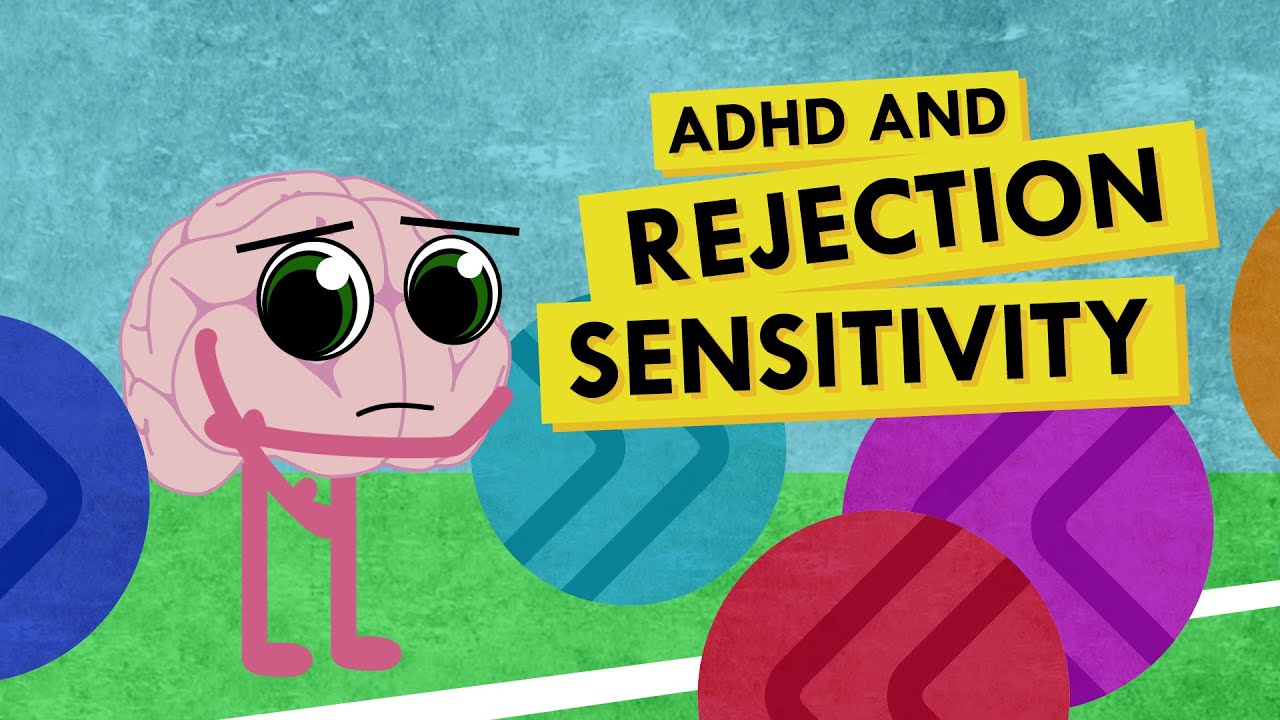
When I discovered that rejection sensitivity dysphoria is common among people with ADHD and autism, everything finally made sense. It felt like someone had been secretly watching my entire emotional life and finally handed me an explanation. I felt seen.
Understanding that my sensitivity wasn’t a flaw but a neurological response changed everything. It gave me the opportunity to look at myself with more compassion instead of shame. It helped me re-frame experiences that once felt like personal failures. I felt like it was the first time I could breathe in years.
RSD isn’t something I chose. It’s something that I live with. And that matters.
Coping with Rejection Sensitivity (What I’m Learning, Slowly)

I’m learning to remind myself that not every silence is disapproval. Not every “no” is rejection. Not every comment is about me. I’m learning to give myself compassion instead of beating myself up for it. I’m realizing that I don’t need to apologize for feeling deeply.
And I’m learning that I don’t have to be in a constant battle with my emotions. I can acknowledge them without letting them take over. I can sit with them without letting them define me.
RSD still hurts. It probably always will. But now, it doesn’t control me the way that it used to. I’m no longer fighting against the way that I’m wired. And every time I remind myself that my worth isn’t determined by someone else’s tone, I’m healing.
One moment, one trigger, one small step at a time.
What does rejection sensitivity look like in your body?
“Vulnerability is not weakness. And that myth is profoundly dangerous.” — Brené Brown
Resources:
- How ADHD Ignites RSD: Meaning & Medication Solutions
- What Is Rejection Sensitive Dysphoria?
- Rejection Sensitive Dysphoria And Its Painful Impact
Discover more from Embrace The Unseen
Subscribe to get the latest posts sent to your email.


